
🟢 Introduction
Allama Muhammad Iqbal was one of the greatest poets, philosophers, and political thinkers of the Muslim world. He is widely known as the “Poet of the East” because of his remarkable contribution to Urdu and Persian literature. His poetry inspired millions of people and played a significant role in awakening the political and spiritual consciousness of Muslims in the Indian subcontinent. Through his powerful ideas and visionary thinking, Iqbal laid the intellectual foundation for the creation of Pakistan. His works continue to inspire people around the world with messages of self-respect, unity, faith, and progress.
🟣 Image 1: Portrait of Allama Iqbal
(Insert image of Allama Iqbal here)
🟢 Early Life and Education
Allama Iqbal was born on 9 November 1877 in Sialkot, which is now in Pakistan. His father, Sheikh Noor Muhammad, was a religious and humble man who greatly influenced his character. Iqbal received his early education in Sialkot and soon became known for his intelligence and love of learning.
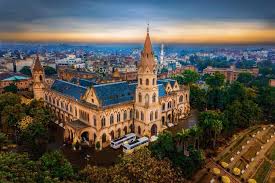
He later attended Government College Lahore, where he studied philosophy, Arabic, and English literature. To further his education, he traveled to England and studied at Cambridge University. He also obtained a law degree and earned a doctorate from the University of Munich in Germany. These experiences broadened his understanding of philosophy, politics, and world affairs.
🟣 Image 2: Government College University Lahore
🟢 Literary Contributions
Allama Iqbal’s poetry is regarded as a treasure of Urdu and Persian literature. His writings focus on self-discovery, spiritual awakening, freedom, education, and the revival of the Muslim community. One of his most important concepts is “Khudi” or selfhood, which teaches individuals to recognize their inner strength and potential.
His famous books include Bang-e-Dra, Asrar-e-Khudi, Rumuz-e-Bekhudi, Bal-e-Jibril, and Zarb-e-Kalim. Through these works, he encouraged people to strive for excellence and contribute positively to society. His poem “Lab Pe Aati Hai Dua” remains one of the most beloved poems among students.
🟢 Philosophy of Khudi
The philosophy of Khudi is central to Iqbal’s thought. According to him, every individual has immense potential and should develop self-confidence, courage, and determination. He believed that a strong personality is built through faith, knowledge, hard work, and discipline.
Iqbal encouraged people to become independent thinkers and active members of society. His message emphasized self-respect, dignity, and continuous personal growth.
🟢 Political Vision
In addition to being a poet, Iqbal was a visionary political thinker. He believed that Muslims in the Indian subcontinent needed a separate homeland where they could freely practice their culture and religion.
In 1930, during the Allahabad Address, he presented the idea of a separate Muslim state. This historic vision later became the basis for the creation of Pakistan in 1947. His ideas greatly influenced Muhammad Ali Jinnah, who led the movement for Pakistan.
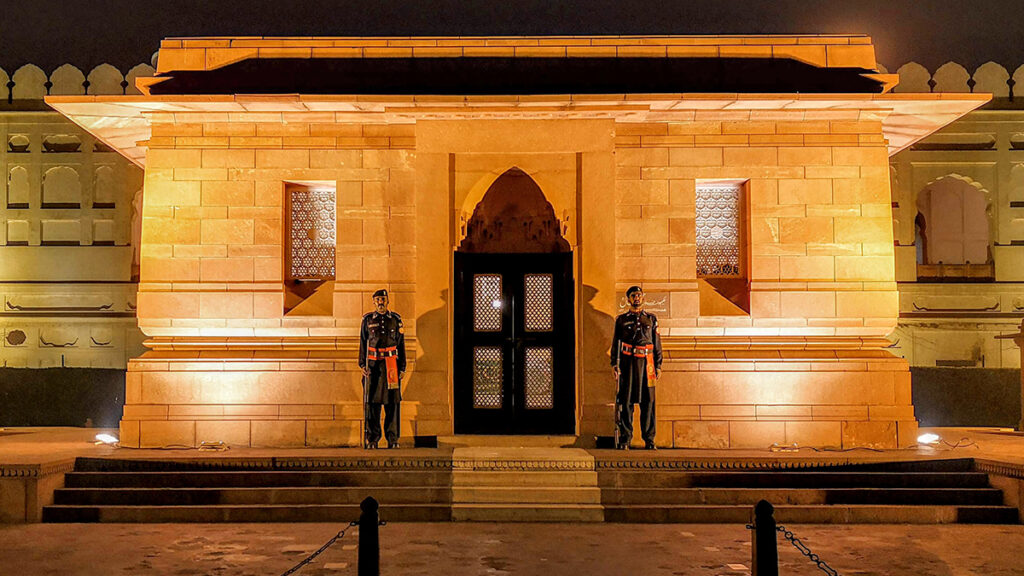
🟣 Image 3: Mazar-e-Iqbal, Lah
🟢 Services to the Muslim World
Iqbal dedicated his life to addressing the challenges faced by Muslims around the world. He promoted unity, education, intellectual development, and social justice. He believed that Islam encourages progress, scientific learning, and moral values.
Through his lectures and writings, he inspired Muslims to embrace modern education while remaining faithful to their religious principles.
🟢 Death and Legacy
Allama Iqbal passed away on 21 April 1938 in Lahore. Although he did not live to see the creation of Pakistan, his ideas and vision played a crucial role in its establishment.
Today, his tomb in Lahore is visited by thousands of people every year. His poetry is taught in schools and universities, and his works have been translated into many languages. He continues to inspire generations with his wisdom and vision.
🟢 Conclusion
Allama Muhammad Iqbal was a remarkable poet, philosopher, and leader whose ideas transformed the intellectual and political landscape of the Muslim world. Through his poetry and philosophy, he inspired people to develop self-confidence, seek knowledge, and work toward a better future. His vision contributed significantly to the creation of Pakistan and continues to guide people today. His message of faith, unity, self-respect, and progress remains relevant and inspiring for generations to come.