
The Founder of Pakistan
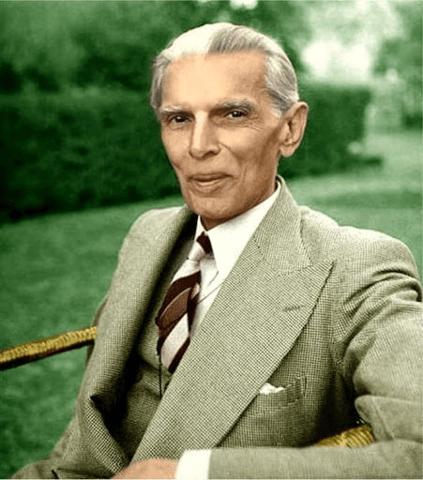

🟨 Introduction
Quaid-e-Azam Muhammad Ali Jinnah is one of the most respected and influential leaders in the history of Pakistan. He is known as the founder of Pakistan and played a vital role in achieving a separate homeland for the Muslims of the Indian subcontinent. His determination, leadership, intelligence, and commitment to justice made him a remarkable figure. Quaid-e-Azam’s vision and hard work led to the creation of Pakistan on 14 August 1947. Even today, people remember him as a symbol of unity, faith, and discipline.
🟥 Early Life and Education
Muhammad Ali Jinnah was born on 25 December 1876 in Karachi, which was then part of British India. He belonged to a business family and was the eldest among his siblings. From a young age, Jinnah showed signs of intelligence and confidence. He received his early education in Karachi and later went to London for higher studies.
In London, Jinnah studied law and became a barrister at Lincoln’s Inn. His time in England helped him develop a deep understanding of law, politics, and democratic values. After completing his education, he returned to India and started a successful legal career.
[Insert Image 2: Young Muhammad Ali Jinnah during his legal career]
🟨 Political Career
Muhammad Ali Jinnah entered politics with the aim of serving the people and protecting their rights. Initially, he joined the Indian National Congress and worked for Hindu-Muslim unity. However, over time, he realized that the interests and rights of Muslims were not being adequately protected.
Jinnah later joined the All-India Muslim League and became one of its most important leaders. His political wisdom and strong leadership helped unite Muslims from different regions and backgrounds. He worked tirelessly to ensure that Muslims would have a secure future and equal opportunities.
🟥 The Pakistan Movement
One of the most significant chapters in Jinnah’s life was his leadership of the Pakistan Movement. He believed that Muslims and Hindus were two separate nations with different cultures, traditions, and values. Therefore, he argued that Muslims needed their own independent state where they could live according to their beliefs and traditions.
In 1940, the Lahore Resolution was passed, demanding separate states for Muslims in the subcontinent. Jinnah led negotiations, political campaigns, and public meetings to gain support for this cause. Despite many challenges and opposition, he remained firm and dedicated to his mission.
His efforts eventually resulted in the creation of Pakistan on 14 August 1947. This achievement made him one of the most important political leaders of the twentieth century.
[Insert Image 3: Quaid-e-Azam addressing a public gathering during the Pakistan Movement]
🟨 Leadership Qualities
Quaid-e-Azam possessed many qualities that made him a great leader. He was honest, disciplined, courageous, and highly organized. He believed in hard work and always encouraged others to remain focused on their goals.
One of his greatest strengths was his ability to make decisions under pressure. He remained calm during difficult situations and inspired confidence among his followers. His speeches reflected his intelligence and determination, motivating millions of people to support the cause of Pakistan.
Jinnah also respected democratic principles and believed in the rule of law. He wanted Pakistan to be a country where justice, equality, and freedom would be available to all citizens regardless of their religion or background.
🟥 Vision for Pakistan
Quaid-e-Azam had a clear vision for Pakistan. He wanted the country to be modern, progressive, and democratic. In his speeches, he emphasized the importance of education, national unity, and economic development.
He believed that every citizen should have equal rights and opportunities. He encouraged people to work hard for the progress of the nation and to maintain harmony among different communities. His famous principles of “Unity, Faith, and Discipline” continue to guide the people of Pakistan today.
Jinnah understood that education was essential for national development. He encouraged young people to acquire knowledge and skills so that they could contribute to the country’s growth and prosperity.
[Insert Image 4: Quaid-e-Azam with students and young citizens]
🟨 Challenges and Sacrifices
The struggle for Pakistan was not easy. Jinnah faced many political, social, and personal challenges. He spent years working tirelessly, attending meetings, delivering speeches, and negotiating with political leaders.
Despite suffering from poor health in his later years, he continued to work for the welfare of the nation. His dedication and sacrifices played a crucial role in making Pakistan a reality. He placed the interests of the people above his personal comfort and well-being.
🟥 Last Days and Legacy
After the creation of Pakistan, Muhammad Ali Jinnah became the country’s first Governor-General. He worked hard to establish strong institutions and address the challenges faced by the newly created state.
Unfortunately, his health deteriorated, and he passed away on 11 September 1948. Although his life was cut short, his contributions to Pakistan remain unforgettable.
Today, numerous institutions, roads, universities, and public places are named in his honor. His speeches, ideas, and leadership continue to inspire generations of Pakistanis.
[Insert Image 5: Mazar-e-Quaid, Karachi]
🟨 Conclusion
Quaid-e-Azam Muhammad Ali Jinnah was a visionary leader who changed the course of history through determination, wisdom, and hard work. His role in the creation of Pakistan is unmatched, and his leadership remains a source of inspiration for millions. He dedicated his life to protecting the rights of Muslims and establishing a nation based on justice, equality, and freedom.
As citizens of Pakistan, it is our responsibility to follow his principles of Unity, Faith, and Discipline and work together for the development and prosperity of our country. Quaid-e-Azam’s legacy will continue to shine as a guiding light for future generations.