
Introduction
Lahore Fort, also known as Shahi Qila, is one of the most famous historical landmarks in Pakistan. Located in the heart of Lahore, the fort represents the glory, culture, and architectural brilliance of the Mughal Empire. It stands beside the magnificent Badshahi Mosque and attracts thousands of local and international tourists every year. The fort has witnessed centuries of political changes, royal ceremonies, wars, and cultural development. Because of its historical and architectural importance, Lahore Fort was declared a UNESCO World Heritage Site in 1981.
The fort spreads over a large area and contains beautiful palaces, gardens, halls, mosques, and gateways. Every structure inside the fort reflects the artistic taste of Mughal rulers and later Sikh and British influences. Today, Lahore Fort is not only a symbol of Pakistan’s rich heritage but also a source of pride for the people of Lahore.
Historical Background
The history of Lahore Fort dates back many centuries. Although the exact origin of the fort is uncertain, historians believe that a mud fort existed on the site long before the Mughal period. However, the modern structure of Lahore Fort was mainly built and expanded during the reign of the Mughal Emperor Akbar in the 16th century.
Akbar rebuilt the fort using strong brick masonry and transformed it into a royal residence. Later Mughal emperors such as Jahangir, Shah Jahan, and Aurangzeb added new sections and improved its beauty. During Shah Jahan’s reign, many marble palaces and decorative buildings were constructed, giving the fort a luxurious appearance.
After the decline of the Mughal Empire, the fort came under Sikh rule in the 18th century. Maharaja Ranjit Singh used the fort as his residence and made several modifications. Later, during British rule, some parts of the fort were damaged or altered for military purposes. Despite these changes, the fort still preserves much of its original Mughal beauty.
Architecture of Lahore Fort
The architecture of Lahore Fort is a remarkable combination of Islamic, Persian, Hindu, and Central Asian styles. The fort is built mainly with red sandstone and marble, which give it a grand and majestic look. The walls of the fort are massive and strong, designed to protect the royal family and soldiers from enemy attacks.
One of the most beautiful features of the fort is its intricate decoration. The walls and ceilings are decorated with fresco paintings, mirror work, marble carvings, and tile mosaics. The Mughal architects paid great attention to detail, making every building inside the fort unique and artistic.
The fort contains several famous structures, including Sheesh Mahal, Alamgiri Gate, Naulakha Pavilion, Moti Masjid, and Diwan-e-Khas. Each structure reflects the creativity and engineering skills of its time.
Sheesh Mahal
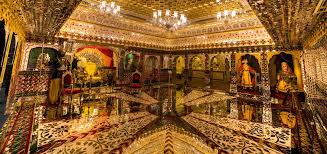
One of the most attractive buildings inside Lahore Fort is the Sheesh Mahal, also known as the “Palace of Mirrors.” It was built by Emperor Shah Jahan in 1631. The palace is famous for its beautiful mirror work on walls and ceilings.
Tiny pieces of colorful glass and mirrors were carefully fixed into floral patterns, creating a sparkling effect when light falls on them. At night, candles and lamps reflected through the mirrors made the palace shine like stars. Sheesh Mahal was used by the royal family for private gatherings and entertainment.
Today, Sheesh Mahal remains one of the finest examples of Mughal decorative art and attracts visitors from around the world.
Alamgir Gate
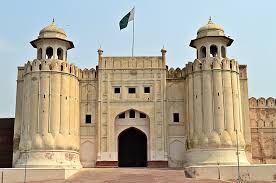
The Alamgiri Gate is the main entrance of Lahore Fort and one of its most recognizable features. It was built by Emperor Aurangzeb in 1674. The gate faces the Badshahi Mosque and was designed to impress visitors with the power and grandeur of the Mughal Empire.
The gate is built with red sandstone and has large semi-circular towers. In the Mughal era, elephants carrying royal guests entered through this grand gateway. Today, Alamgir Gate serves as the main entry point for tourists visiting the fort.
Important Buildings Inside the Fort
Lahore Fort contains many historical buildings that highlight Mughal luxury and royal lifestyle. Some important structures include:
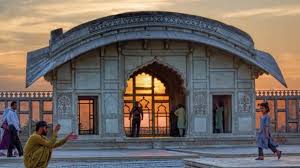
Naulakha Pavilion
The Naulakha Pavilion was built by Shah Jahan using white marble. It is called “Naulakha” because it reportedly cost nine lakh rupees to build, which was a huge amount at that time. The pavilion is known for its elegant design and delicate carvings.
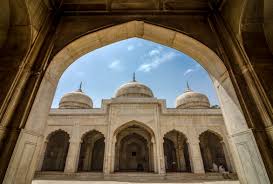
Moti Masjid
he Moti Masjid, or “Pearl Mosque,” was built by Emperor Jahangir. It is made of white marble and was used as a private mosque for the royal family.
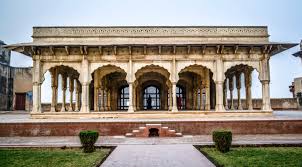
c) Diwan-e-Khas
The Diwan-e-Khas was the hall for special royal meetings. Important state matters and meetings with foreign ambassadors were held there.
d) Picture Wall
The Picture Wall of Lahore Fort is one of the largest mural walls in the world. It contains colorful tiles, paintings, and calligraphy that display Mughal artistic excellence.
7. Cultural and Historical Importance
Lahore Fort holds great cultural and historical significance for Pakistan. It represents the golden age of Mughal architecture and reflects the traditions, art, and values of that era. The fort also reminds people of Lahore’s importance as a cultural and political center in South Asia.
Many festivals, educational tours, and cultural events are held at the fort. Students and researchers visit the site to learn about Mughal history and architecture. The fort also plays an important role in promoting tourism in Pakistan.
Because of its unique heritage value, UNESCO recognized Lahore Fort as a World Heritage Site. This recognition helped increase international awareness about the importance of preserving the monument.
8. Preservation and Challenges
Although Lahore Fort remains a magnificent monument, it faces several challenges. Pollution, weather conditions, and increasing urban development have affected parts of the structure. Some decorative artwork and frescoes have faded over time.
The government of Pakistan and heritage organizations are working to restore and preserve the fort. Restoration projects aim to protect the buildings, repair damaged sections, and maintain the historical beauty of the site. Conservation experts use modern techniques to ensure that the fort survives for future generations.
Tourists are also encouraged to respect the historical site by avoiding littering and damaging the structures.
9. Tourism and Visitor Experience
Lahore Fort is one of the most visited tourist attractions in Pakistan. Visitors can explore the grand halls, royal chambers, gardens, and museums inside the fort. Guided tours provide detailed information about Mughal history and architecture.
The fort becomes especially beautiful during the evening when lights illuminate its walls and buildings. Many photographers and history lovers visit the site to capture its beauty and learn about its rich past.
The nearby Badshahi Mosque and the old streets of Lahore further enhance the visitor experience, making the area a major cultural destination.

10. Conclusion
In conclusion, Lahore Fort is a priceless treasure of Pakistan’s history and culture. Its magnificent architecture, rich history, and artistic beauty make it one of the most important historical monuments in South Asia. From the dazzling Sheesh Mahal to the majestic Alamgiri Gate, every part of the fort tells a story of royal splendor and architectural brilliance.
The fort not only reflects the greatness of the Mughal Empire but also serves as a reminder of Lahore’s glorious past. Preserving this historical monument is essential so that future generations can continue to appreciate and learn from this remarkable symbol of heritage and culture.